Archive for the ‘SOCIAL NETWORKING’ Category

SOCIAL NETWORKING:

Saturday, September 5th, 2009


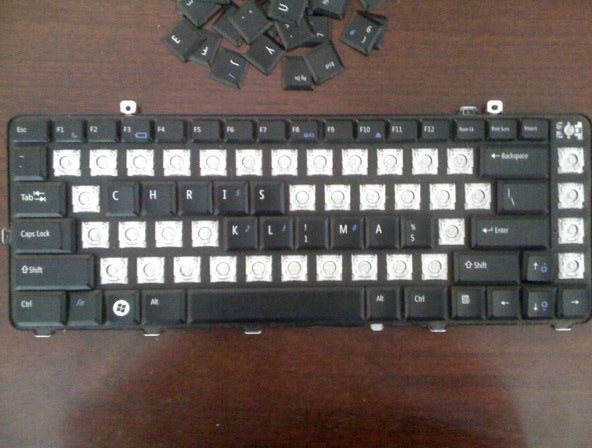
Just as I was writing this I noticed a post in Facebook by Chris Klimas that tells the story perfectly in a visual:

090509sn

I don’t understand this world where people don’t want to see the trees that make up the forest; where ‘friends’ number in the hundreds or thousands yet have never been touched or held.

It’s a place where we claim unity via communication of typed sentences, often restricted by number of characters such as in twitter, typing into boxes and pressing a ’submit’ or ‘publish’ key. Where we needn’t ask anyone to even be there, as a face to face or telephone call may require, to communicate because we just throw it out there and let them catch it at will. We don’t know or even care if they do.

Social networking may be the connection of strangers who pretend to be friends for a few minutes as long as the walls of distance are in place. We seem to care more for people in unknown quantities, in unknown quarters: ‘the poor’, ‘the hungry’, ‘the illegal alien’, ‘the oppressed’, ‘the elderly’, rather than any specific, touchable, reachable neighbor or friend. The whole rather than the individual. Which sounds terrifically magnanimous but at the same time terribly empty. Something rings hollow, false. It’s a juxtaposition of intimacy and distance in space. Even as we widen our circle of communication, we seem to accept less intimacy as we draw our own walls, presenting our lives in limited blocks of text.

This also on today’s ‘twitter’ news from and article on Networking Etiquette at USA Today : “After all, the average person has 120 “friends” on Facebook, according to the company. In real life, the average North American has about three very close friends and 20 people they are pretty close to, said Barry Wellman, a sociologist at the University of Toronto.”

This whole topic fascinates me and I take it personally; I’ve always been better at writing than face to face verbal communication and yet, why does this new approach bother me when I should be reveling in the idea that my time has finally come?

SOCIAL NETWORKING: Keeping Hurt at a Distance

Thursday, April 23rd, 2009


If you’re sensitive, the new communication methods of twitter, MySpace, Facebook, et al, are no less humiliating than the face-to-face snub.

My sensitivity is limited to the opinion of those I care about and hold in high esteem or a direct attack by anyone, so this is not a personal case of complaint but rather an observation of the workings of the medium. For example, on twitter, you can opt to be notified when someone starts following your tweets, but you don’t necessarily have to follow them. Since the majority of those who follow are just looking for numbers, you can opt out, and, you can block them if like me, you don’t choose to be a mere addition in somebody’s numbered quest for fame. But what about someone you know? Well it’s pretty hard to either block or not follow because they’ll know it. There’s even (or used to be) qwitter.com that showed when someone stops following you so you can figure out time-wise what you tweeted that made them drop you like a hot potato.

I don’t have experience with MySpace, but on Facebook, it’s a constant push to add to your “Friends” listing. Based on your personal list, that list is expanded to their lists, and these folks are touted as possible friends. This works well to discover who else you might know is on Facebook, and obviously is an excellent method of expanding and connecting. But these faces, one at a time, show up in a prominent space each time you log in, with the suggestion that you add them to your list. But what if you don’t want to? What if you feel it would be an imposition and, knowing that they have to approve you, are intimidated into non-action. Or maybe you just don’t like’em.

Of course this brings you to the other side of the story; if you’re seeing them, they’re watching your image come up randomly with the same suggestion, that they add you. And they don’t. You have to figure that they’ve been given the opportunity, but have chosen not to take it. Is it intimidation or is it b) they just don’t like you? Do you wonder why they’re not picking you for their team? And meanwhile, they’re wondering the same about you. Ironically, these forms of socializing are acting as an equalizer.

You can’t be super sensitive to these things and by the same token, you can’t expect the world to want you watching them. These are, just as in real life, social situations and as technology creates new communication means the social mores will eventually be established to keep us all in a polite society where hopefully no one’s nose gets out of joint.

SOCIAL NETWORKING: Repetition

Wednesday, April 22nd, 2009


Like many people, I blog as well as Twitter and post on Facebook and diigo. Each has its purpose for me, and each its own circle of “friends.” In fact, I had been on Facebook to try it out and dropped out because it didn’t seem to do it for me. I rejoined under invitation from my closest high school girlfriend and folks found me there. Diigo is used only for particular new media linking, and I haven’t exercised my Netvibes circle to link in with others. The two weblogs I have are separated by topic. Twitter is a place for those random quick thoughts that don’t beg a paragraph to a page.

One thing I’ve noticed is that my circle of “friends” is repeated in the different networking systems (and I’ve avoided connecting with family on these and may start up a separate identity for them instead) and while I tried but decided against repeat posts at twitter and Facebook, I notice that many of the others do exactly that. And, if another area is merely being pointed out, i.e., a link to their longer posting at a weblog or video site, then there are three or five or more places where a single item may appear, and the question then becomes where to respond if a response is wanted.

Obviously the same response can be posted at all sites, yet this seems to just clog the atmosphere with duplication. On the other hand, the single post may induce different threads of commentary and so wander off into areas that are related, and yet not linked.

Interesting.

SOCIAL NETWORKING: Facebook Event

Tuesday, April 21st, 2009


I’m not exactly sure how it was set up, but I was recently invited to an event by a dear friend on Facebook and after taking part, realized that it was a successful example of folks getting together momentarily in time and space.

In this case, it was as a memorial on the one-year anniversary of her mother’s passing. I received e-mail notice and checked in to see the number of people invited, who would be attending, and the request to share a story or two about her mom with the others. It was noted that the event was scheduled for a particular date and time period, in this case, April 19th, from 2:00 pm to 4:00 pm (Tennessee time–that’s one of the glitches, that you have to specify time zone or else everyone’s thinking differently).

This idea could easily work for conferencing or discussion that needs a rapid input of ideas from a group, i.e., brainstorming session. Despite its silence and lack of visuals–although Pat did put up some nice images of her mom and the family to add to the sense of closeness–there was a feeling of sharing and the imagination puts the attendees sitting ’somewhere’ with their fingers on a keyboard. People drifted in and out, not all online at the same time (whereas this could and would likely be a requisite for a group discussion), and it seemed that some just left the application open and wandered back in to check new comments or add a thought.

All in all, a lovely experience to share this particular span of time with a high school best friend in remembering her mother and offering support in the grieving process.  But I can also see this as a viable means to hook up a group for anything from classroom discussions to topical groups to meeting points.

SOCIAL NETWORKING: Part VII (?) – Lassoing the Universe

Friday, February 6th, 2009


When I received a Facebook invite from my high school best friend, Pat, I cringed. This horrid reaction was only because I’d tried Facebook before and found it to just be one more place to scatter my thoughts. It seemed that everyone knew if I was ‘on’ and I didn’t feel right about not contacting them, as if I was tiptoeing by to avoid them. There may be a shutoff for this but I didn’t stay on long enough to find out. But with the best of intentions to keep in touch, it seemed the years flew by without contact between Pat and I above Christmas catchups and a promise to call or email right after the holidays.

Within an hour of rejoining, I had seven friends. You can’t really turn down an invitation, and luckily, these are all people I know and like so it wasn’t a problem. It’s up to nine now, after a day on the network and that number could rise quickly very easily since Facebook sorts through all its data on all its members and finds connections to bring up loads of folks you may know. Via Pat’s page, I found a photo of a young couple who are likely related, (son?) to my first serious boyfriend, Jimmy.

Then I played a bit by putting in people that I do know, such as members of my family, my husband’s, some of our friends and old acquaintances. Yep, there are plenty of them on Facebook. I immediately found two of my nieces, two of my nephews, my sister-in-law, my great niece, part of my neighbor’s family, several more friends, and a slew of my customers and past co-workers. And here’s where I stopped.

We all have family, friends, co-workers, a present and a past. Facebook, it would seem, can bridge all the gaps of time and bring everyone together. That’s not my way of social intercourse. There are different worlds for different friendships and while it’d be a great idea to let everyone know simultaneously what’s going on–sort of like that detestable Christmas letter–there are certainly different layers of intimacy and interests among our circles of communication that don’t need to or want to overlap.

More on this later, or maybe I’ve already covered this issue in the series I’ve done here. I’m just thinking that maybe I’m not good with large groups not only in physical living, but on the wide world of the internet either.

Social Networking: A Holiday Wish

Wednesday, December 24th, 2008


122408xmas

Social Networking: Part VII – The Downfall of Grammar & Spelling?

Tuesday, December 9th, 2008


Writinghood has a post this morning bemoaning the loss of good writing skills by way of technological access. While I might agree that a lot of people dont' spell well, use proper capitalization and sentence structure, or bother proofreading, I would suggest that if technology is the problem, the burden of the degeneration of proper writing form is based not on weblogs, but on text messaging, email, and the generation which grew up in this new world of visual communication. And too, I would most assertively take into account that the personality of the user/writer is the most overwhelming influence of all.

"Blogs and Instant Messengers: the Bane of Good Writing Habits" is deceptively simplifying a trend towards less stress on grammar, punctuation and spelling. The majority of people aren't real writers, aren't terrific at good writing, and hate it. It's true that text messaging and limited character space such as what twitter allows encourages stuff such as "w meet u at 3, be :) " but blogs have no such restrictions on space and the majority of folk who keep them up (as opposed to those who drop them after a a few months, or write sporadically with months in between) develop a sense of pride and flow of words that encourages good writing habits. It is my belief that the more one reads and the more one writes, the better one gets at improving one's skills. 

It all comes down to this: if you're going to be a writer, every word you write will be improved by the practice. Twitter and such services, much like poetry, encourage brevity. That's what a serious writer will be aware of in using it. Weblogs will be seen as a showcase of communication.  The serious writer will rise above the medium even while it serves as a great means of social communication for the everyday user.

Social Networking: Part VI – The Ugly or Anonymity Revisited

Wednesday, December 3rd, 2008


It was bound to happen, the good and bad of the freedom to create a different personality was brought to task in the Lori Drew case, a certainty that things can always be pushed beyond the bounds of original intent to become dangerous. And as always happens, one bad apple spoils the whole lot for the rest of us.

By taking on the identity of a teenage boy, Lori Drew via MySpace harrassed a young girl purportedly to suicide. Now the courts have ruled that she indeed broke the understood contract that users be "truthful and accurate when registering."  But who reads the small print? Of course, one is meant to do so, expected to do so, but it is more often the case that without malicious intent, the majority of users are not truthful even if they do bother to read the agreement in whole. 

Read Write Web has a good post and commentary on this matter, and all we can do is wait and see what happens as a result of the one most serious case of abuse and its effect on the global communities of social networking.

Social Networking: Part V – Participation

Saturday, November 29th, 2008


Referring again to Wikipedia's information on the social networks set up and their reported membership, it appears that something is available for just about every interest. While many of the main organizations are wide open and non-specific, they usually have within the whole a large number of groups or communities formed based on common interests. The larger groups such as Facebook and MySpace boast memberships (at least according to Wikipedia) of 125,000,000 (Facebook) and 245,000,000 (MySpace). Flickster, Classmates.com, Black Planet, are more dedicated to specific topics and still number in the 20-50 million member range.

Some folk are on a number of different networks, but I personally find it more trouble to spread out than to find a single 'home base' even though naturally all the networks can be interlinked so that updating one automatically sends the data to the others.

As soon as one system becomes 'hot' there are any number of widgets and sites that create enhancements or capabilities beyond the orginal. Twitter is one of the most simple and basic systems of communication, yet there have been widgets that enable writing from the desktop, finding out why someone's 'dumped' you (Quitter), and I've just been advised of a means to form groups within the Twitter community.

With us all tied together in this giant spider web city that covers the world, there's bound to be a widely diverse group of folk involved; old and young, artsy, literary, religious, political, moms and teachers and students and teenagers, and . . . weirdos.

The anonymity of the internet leaves itself open to abuse and it comes to a large degree from spammers that leave comments or trackbacks, mainly to gain numbers that I don't truly understand or care to figure out. There are less anonymous commenters to weblogs for example, that aren't looking for followers but rather some form of celebrity by being argumentative or outrageous. This is the price we pay for communication. There are ways around it, but it is an annoyance in any case.

Most users of any social network are there for any number of reasons including sharing information, seeking data, camaraderie, validation, etc., but within each I suspect two things are essential as a force: the story within each of us, and the need to be heard.

Social Networking: The Pros and Cons of Social Networking

Wednesday, November 26th, 2008


(This is a duplicate of my original post on Spinning, copied here to keep it with the series)

We've embraced the wonders of the internet, the amazing opportunities
it offers and the world it opens up to every individual with computer
access. We've come a long way from piling into the wagon to drive fifty
miles to Grandma's for a weekend visit. The postal service has improved
since they've been able to use mailtrucks and airplanes instead of
horses and steamships. The telephone added the sense of hearing though
the visual suffered for it. And now the web along with weblogs and twitter and Facebook and a dozen different social networking services limits the dark corners to hide in.

But even the weblog is outdated, I've heard, and it's being suggested that we "pull the plug on blogs": 

The time it takes to craft sharp, witty blog prose is better spent expressing yourself on Flickr, Facebook, or Twitter.

If you quit now, you're in good company. Notorious chatterbox Jason Calacanis made millions from his Weblogs network. But he flat-out retired
his own blog in July. "Blogging is simply too big, too impersonal, and
lacks the intimacy that drew me to it," he wrote in his final post.

Now I've likely just hurt someone's feelings by being less than enthusiastic about joining diigo
after sending an email with data to share. I've apologized, and I do
understand the use of diigo (or I'm trying to) as a tool for sharing,
but it seems that while I've breached a certain code of camaraderie in
wanting to pass information to an individual rather than splatter it on
a website, it does take away even that little smidgen of a personal
touch that email manages to cling to.

I'll admit that I'm
eternally grateful to the system, and likely one of the very same type
of person I'm here to complain about. "I'm a writer, I'll send you an
email," I say, often staving off the phone conversation that once was
an important part of my life. Nowadays, there are only a few friends I
talk to via telephone–and that's actual voice-talking, not text
messaging. Once email and weblogs were invented, I figured I'd found my
niche. I've also dabbled in Twitter, Facebook, Myspace, Plurk, and now
diigo.

But there're some drawbacks to the social networking via
the web. It's not something I've done a study on, but I've been getting
the general feeling of a lack of politeness in both the real world and
the semi-real world of the internet. For example, with job postings and
responses done via websites, there are hundreds competing for the same
job, so I do understand that response from a prospective employer would
be more difficult, but these days, an applicant never knows if he's
being considered or got dumped within minutes. Because it's so easy to
avoid responding, this same thing is happening on weblogs, and in the
social networking groups. Just for shits, I've written some outrageous
things on twitter or on a blog (and some deeper, more personal
sharings) and received absolutely no conversation. You know folks have
read it, and yet there's no human reaction as a sign of empathy or
surprise or whatever. While you've made some friends via these means,
the friends that you might ordinarily expect to talk with in person (if
they read your web communications at all), have that option of ignoring
what they read.

How would this play out in person? Would they
silently turn around and walk away? See, social networking on the
internet isn't really very social when you look at it that way.  Here's
another viewpoint, from Don Tennant at ComputerWorld, referring to another article by Kip Layton,
a school administrator in a tiny town in Alaska regarding email and its
effect on handwriing. Don gives us his feelings about snail mail when
his son's computer is down:

People over 35 generally have lovely handwriting. The 25-to-35 age
group has decent handwriting. And the under-25 crowd is a legibility
laughingstock. It's all because of computers. And it's kind of a shame.

(…) I clearly could have written the letters on my computer and printed
them out, but I didn't. I suppose the reason is that I can remember as
a kid getting letters from my mom and dad and noticing their different
styles of handwriting and appreciating that unique personal expression.

I wanted my son to see that same expressiveness and individuality and
personality in my correspondence with him, so I've been writing my
letters to him longhand.

Hadn't
thought of that; I treasure recipes, notes, cards, little papers where
the writing is clearly that of my mother, or my father, or someone else
dear to me. It's not as personal as physical presence, but it's sure a
step above the cold type of an email.

Now maybe I'm just more
bothered by this than most folk, as I'm more the type that have a
precious few close friends and another layer of well, friends, and a
lot of acquaintances so I'm not trying to expand either my presence or
my popularity.  But I see more than just a separate society online.
Frankly, I see the same avoidance of connection, the rudeness, the same
distancing that expands a circle of friends to global yet moves those
one would be in contact with via phone or in person to that same level,
and that same ease of slipping away that the internet allows creeping
into the realities of face to face living. It need not be that way, but
there's a couple of generations now that have been brought up in this
new world of great possibility and possible dehumanization of society. 
And some of us, the ones who notice these things, won't be here to
remember them.